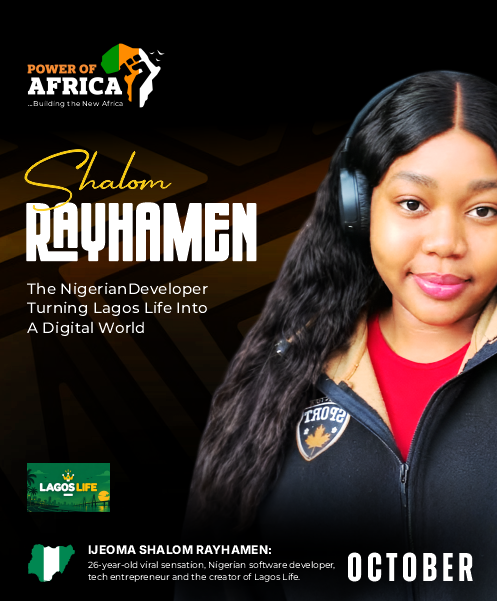
From writing code to building a virtual Lagos that millions can call home, Nigerian software engineer Ijeoma Shalom Rayhamen is showing the world what happens when African experiences become the inspiration for digital innovation.
What if you could experience the hustle of Lagos without stepping outside your home? Find a job, earn money, rent an apartment, navigate the city’s social scene and build a life of your own, all inside a video game?
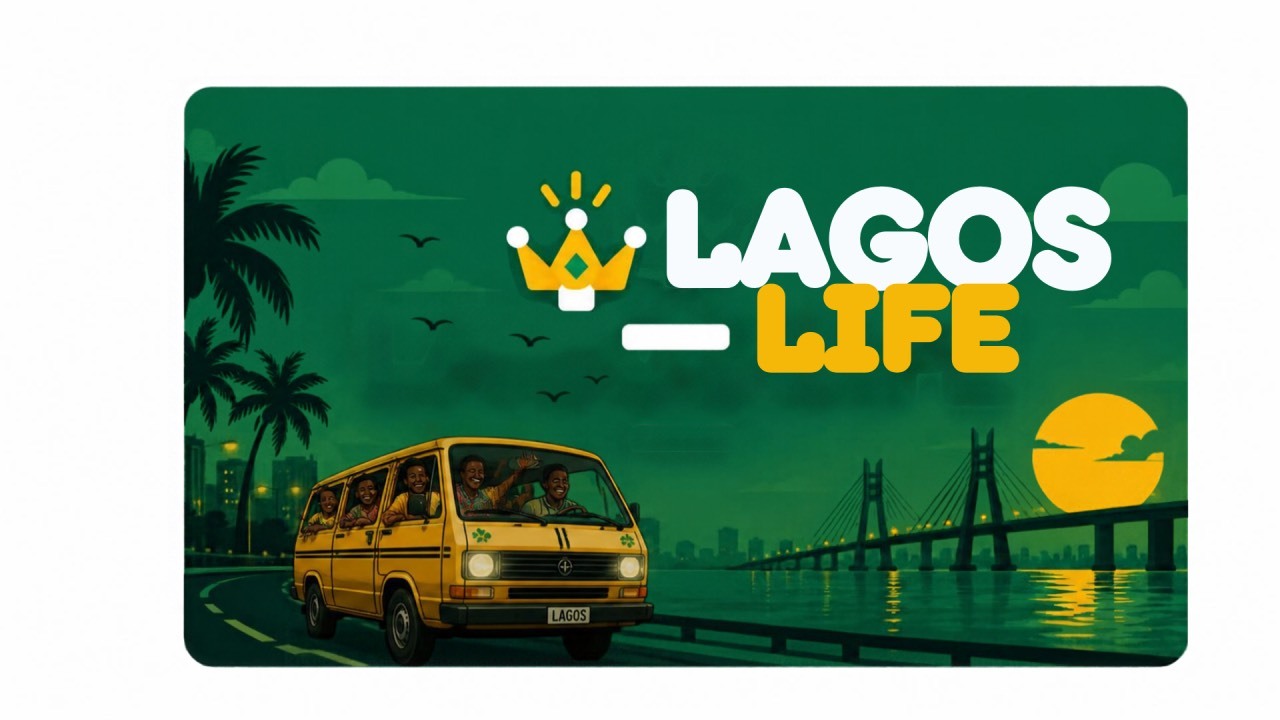
For Nigerian software engineer Ijeoma Shalom Rayhamen, popularly known online as Shalom Rayhamen, this idea became Lagos Life, a browser-based simulation that transforms familiar Nigerian experiences into an interactive digital world.
Launched on October 1, 2026, the game attracted widespread attention almost immediately. Within days, it had reportedly surpassed one million players, demonstrating the enormous appetite for digital experiences that reflect people’s everyday realities. By October 8, reports put its player base at more than four million.
But the story behind Lagos Life is about more than a game going viral. It is about a developer who recognised an opportunity to tell a distinctly Nigerian story through technology.
An Idea Rooted in Familiar Experiences
Growing up, Rayhamen enjoyed playing The Sims 3, a popular life-simulation game that allows players to create characters, build homes and navigate virtual lives. Yet she wanted something different: a game that reflected the environment she knew, the culture she understood and the everyday experiences of people like herself.
What would a life-simulation game look like if it were built around Nigeria?
That question eventually became Lagos Life. The game allows players to create characters, find employment, earn virtual naira, rent and furnish homes, socialise and explore familiar aspects of Lagos. Its appeal lies in how it draws from the details of Nigerian life, from the struggle to make money to the desire for a better lifestyle. Rather than asking players to imagine themselves in a distant, unfamiliar world, Lagos Life invites them into one they already recognise.
It turns the realities of Nigerian life into an experience people can participate in, rather than simply watch.
Eight Hours, One Idea and a Viral Launch
Perhaps one of the most remarkable parts of Rayhamen’s story is how quickly the first version came together.
According to her account in an interview with Zikoko, she began working on Lagos Life late one Wednesday night and continued coding until around 5 a.m. She shared the game online later that morning and went back to sleep.
By the time she woke up, the game was already attracting significant attention. What began as a personal project had become an internet sensation, with thousands of people trying it out and sharing their experiences online. Within days, the game had crossed the one-million-player mark. The speed of its growth was striking, but the idea itself was not entirely new to Rayhamen. She had spent years working in software development and had explored game development as a hobby. Lagos Life brought those experiences together in a way that resonated with a much wider audience. Her journey offers a reminder that innovation does not always begin with a large company, an expensive studio or a carefully planned product launch. Sometimes, it begins with an idea someone finally decides to build.
The Journey Behind the Success
Rayhamen’s success did not happen overnight, even if Lagos Life’s popularity appeared to. She began learning to code in 2018 and continued developing her skills despite challenges with equipment, electricity and internet access. Her first professional software development opportunity came in 2020, when she worked on the front end of a medical booking application.
In 2021, she secured a remote software engineering role through a connection made on Facebook. Two years later, her career earned her a UK Global Talent visa, recognising her standing in the technology sector. By the time she launched Lagos Life, she had already spent years building her expertise and working on digital products.
Her experience highlights an important part of the African technology story: behind many seemingly sudden breakthroughs are years of learning, experimentation and persistence.
Why Lagos Life Matters Beyond Entertainment
Lagos Life’s success raises an important question about the future of African digital entertainment.
For years, many of the world’s most widely recognised video games have been built around foreign settings, characters and cultural references. African developers and stories have often had less visibility in the global gaming industry. Rayhamen’s creation offers a different possibility.
By placing Nigerian culture and everyday experiences at the centre of the game, she has created a product that feels familiar to local players while remaining accessible to people outside Nigeria who want to explore a new virtual world. The game’s growth also suggests that cultural relevance can be a significant advantage in technology. Players are not simply interacting with characters on a screen. They are recognising familiar environments, social dynamics and ambitions in a digital space.
The opportunity extends beyond gaming. African developers can build globally accessible products inspired by local challenges, languages, lifestyles and cultural experiences. In that sense, Lagos Life represents more than a successful game. It demonstrates how African stories can become the foundation for commercially valuable digital products.
From Viral Game to Growing Business
The challenge now is to turn Lagos Life’s early popularity into a sustainable business. Rapid growth brings its own demands, including improving performance, maintaining a stable virtual economy, responding to player feedback and building the infrastructure needed to support millions of users.
Rayhamen has acknowledged the difficulties of managing the game’s rapid expansion while initially remaining its sole coder. She has also spoken about plans to develop the project further and expand into other virtual experiences. These next steps will determine whether Lagos Life can evolve from a viral success into a lasting presence in the gaming industry. .But its early reception has already demonstrated the potential of a Nigerian-developed product built around an experience its audience understands.
A New Possibility for African Innovation
Shalom Rayhamen’s story is a reminder that innovation is not limited to solving problems in finance, healthcare, agriculture or infrastructure. Entertainment, too, is an important part of the digital economy, creating opportunities for software development, entrepreneurship, advertising and cultural expression.
Her work challenges the assumption that African developers must look elsewhere for inspiration or build products that imitate experiences created in other parts of the world. Sometimes, the opportunity lies in paying closer attention to home.
Lagos Life takes a city known for its energy, ambition, contradictions and constant movement and transforms it into a world people can explore through their screens. And in doing so, Rayhamen is helping demonstrate that African creativity is not simply something to showcase to the world. It can also be the starting point for building products, businesses and entirely new digital experiences.
