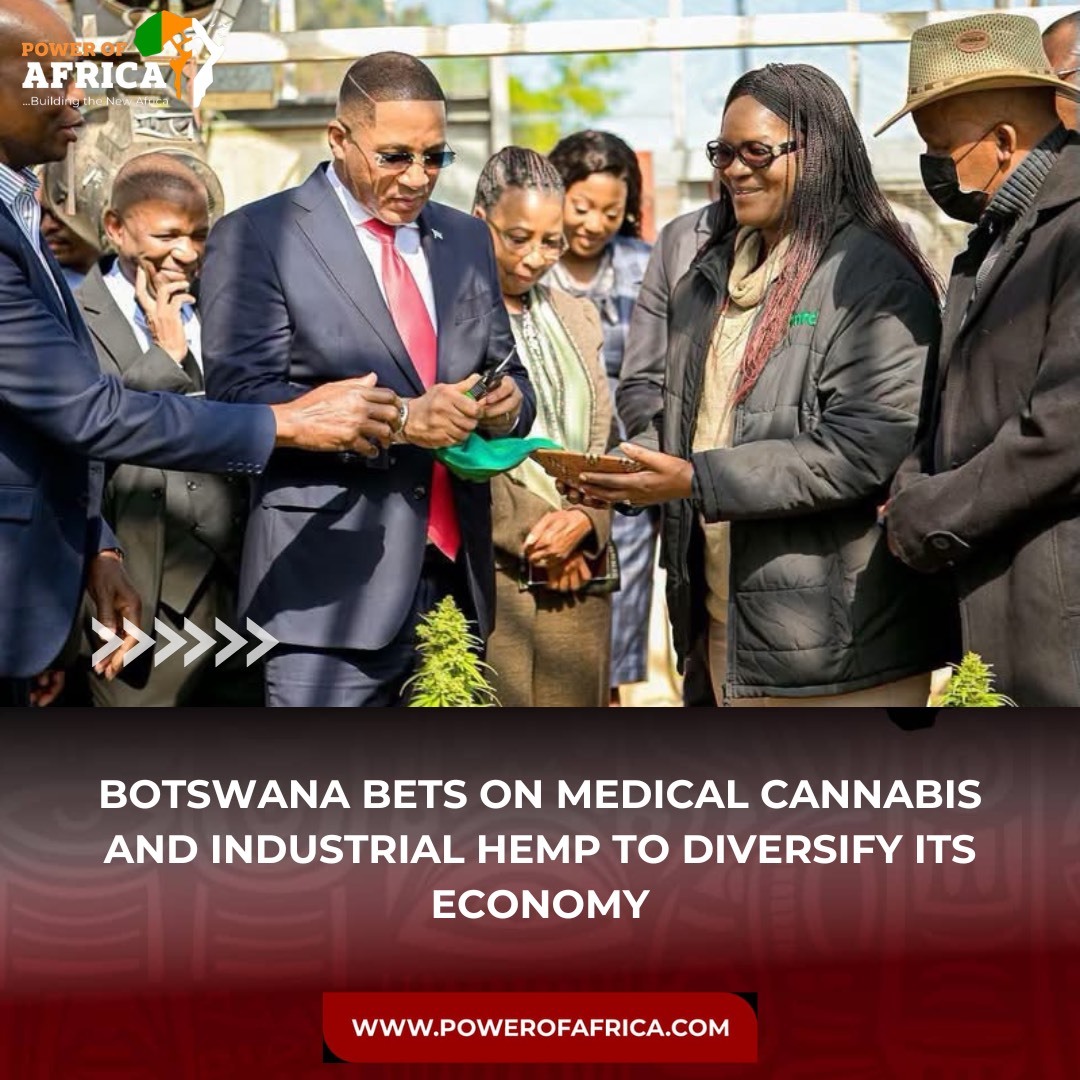
Botswana is accelerating efforts to reduce its long-standing dependence on diamond mining by promoting the cultivation of medical cannabis and industrial hemp, as the government looks to unlock new sources of economic growth, attract investment, and create jobs.
The move forms part of Botswana’s broader economic diversifi cation strategy under President Duma Boko, whose administration has identifi ed the regulated cannabis and hemp industry as a potential driver of agriculture, manufacturing, pharmaceuticals, and exports.
The latest momentum follows successful government-backed industrial hemp trials conducted by the National Agricultural Research and Development Institute (NARDI). According to President Boko, the pilot project demonstrated that hemp can be grown successfully under Botswana’s climatic conditions, paving the way for commercial cultivation.
Industrial hemp, unlike recreational cannabis, is cultivated for a wide range of commercial uses. It can be processed into textiles, paper, biodegradable plastics, construction materials, biofuels, animal feed, and health products. Medical cannabis, meanwhile, is used in the production of regulated pharmaceutical treatments for certain health conditions.
The move forms part of Botswana’s broader economic diversifi cation strategy under President Duma Boko, whose administration has identifi ed the regulated cannabis and hemp industry as a potential driver of agriculture, manufacturing, pharmaceuticals, and exports.
The latest momentum follows successful government-backed industrial hemp trials conducted by the National Agricultural Research and Development Institute (NARDI). According to President Boko, the pilot project demonstrated that hemp can be grown successfully under Botswana’s climatic conditions, paving the way for commercial cultivation.
Industrial hemp, unlike recreational cannabis, is cultivated for a wide range of commercial uses. It can be processed into textiles, paper, biodegradable plastics, construction materials, biofuels, animal feed, and health products. Medical cannabis, meanwhile, is used in the production of regulated pharmaceutical treatments for certain health conditions.
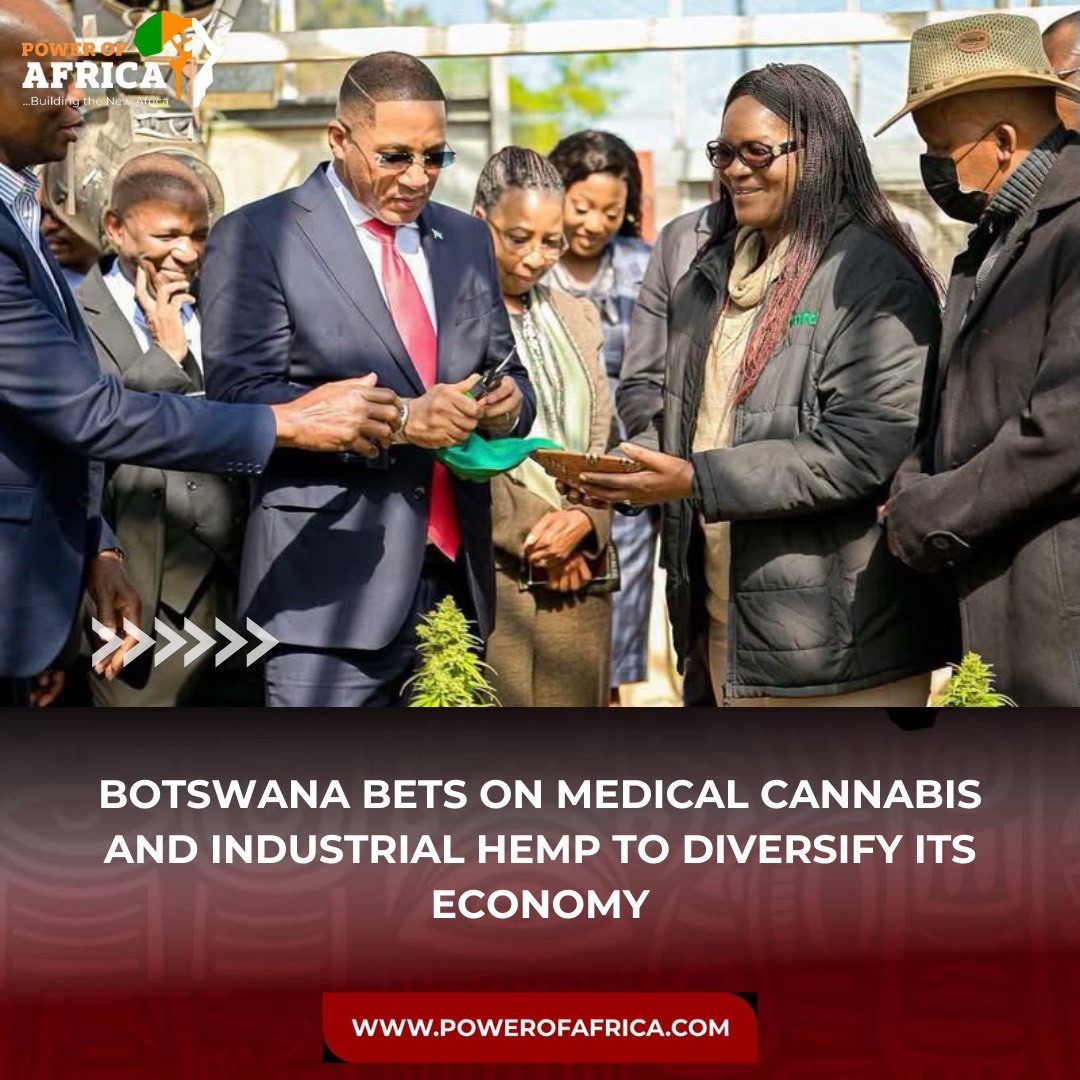
Government offi cials believe the emerging industry could help create new opportunities for farmers, researchers, manufacturers, and entrepreneurs while opening the door to high-value export markets. Plans are also underway to establish a regulatory framework that will govern licensing, production, and quality standards to ensure the industry develops in a safe and controlled manner.
Botswana’s economy has historically relied heavily on diamond exports, making it vulnerable to fl uctuations in global demand and commodity prices. By investing in new industries such as industrial hemp and medical cannabis, the country hopes to build a more diversifi ed and resilient economy capable of generating sustainable employment and long-term growth.
Economists say Botswana’s approach refl ects a wider trend across Africa, where several countries are exploring regulated cannabis industries as a way to boost agricultural production, expand manufacturing, and attract foreign investment. However, they also stress that the sector’s success will depend on clear regulations, responsible oversight, and the development of competitive value chains.
For Botswana, the shift is about more than introducing a new crop. It represents a strategic effort to reshape the country’s economic future by investing in emerging industries that can complement its traditional mining sector and position the nation for more diversifi ed, inclusive growth.
Botswana’s economy has historically relied heavily on diamond exports, making it vulnerable to fl uctuations in global demand and commodity prices. By investing in new industries such as industrial hemp and medical cannabis, the country hopes to build a more diversifi ed and resilient economy capable of generating sustainable employment and long-term growth.
Economists say Botswana’s approach refl ects a wider trend across Africa, where several countries are exploring regulated cannabis industries as a way to boost agricultural production, expand manufacturing, and attract foreign investment. However, they also stress that the sector’s success will depend on clear regulations, responsible oversight, and the development of competitive value chains.
For Botswana, the shift is about more than introducing a new crop. It represents a strategic effort to reshape the country’s economic future by investing in emerging industries that can complement its traditional mining sector and position the nation for more diversifi ed, inclusive growth.
