Burkina Faso’s rapidly expanding gold industry is attracting growing interest from Saudi investors, as the West African country looks to strengthen control over its mineral wealth and draw new international capital into the sector.
The interest comes after Burkina Faso recorded a major increase in gold exports in 2025. Customs data show that the country exported 99.13 tonnes of gold worth about CFA5.88 trillion, equivalent to roughly $10 billion, making gold overwhelmingly its most valuable export. Gold accounted for more than 91% of the country’s total export earnings that year.
The new Saudi interest was highlighted after representatives of Sarmady Co, a Saudi company, met Burkina Faso’s ambassador to Saudi Arabia, Boukary Savadogo, in Riyadh on August 30. Discussions focused on possible investments and partnerships in Burkina Faso’s mining industry. Sarmady expressed interest in investing in the country and was invited to submit a formal investment proposal for consideration by Burkina Faso’s authorities. No investment agreement or financial commitment has been announced yet, meaning the discussions remain at the exploratory stage. Gold at the centre of Burkina Faso’s economy
The scale of Burkina Faso’s gold industry has changed significantly in recent years. The country produced more than 94 tonnes of gold in 2025, according to Burkina Faso’s mining authorities. The government has also been working to increase state participation in the industry and ensure that a larger share of the value generated by the country’s mineral resources remains within the country.
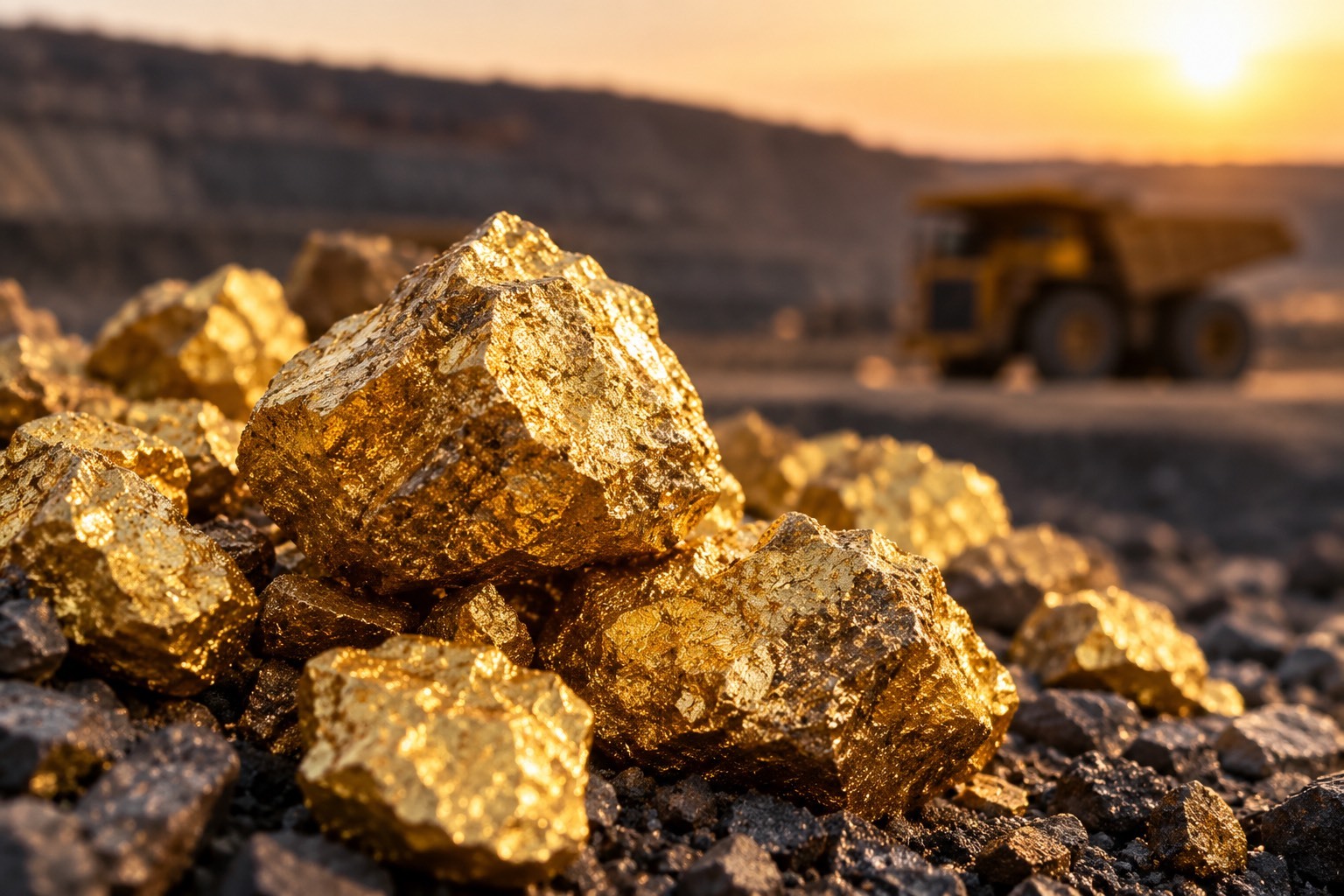
The surge in exports was not simply driven by higher gold prices. Burkina Faso also exported considerably more gold in 2025 than in previous years. The value of gold exports more than doubled from 2024, reaching CFA5.88 trillion. The United Arab Emirates and Switzerland were the country’s dominant gold buyers in 2025, accounting for approximately 56.6% and 41.4% of gold purchases respectively. Saudi Arabia sees an opportunity.
The Saudi interest comes as economic relations between the two countries expand beyond traditional areas of cooperation. In January 2025, Burkina Faso’s government said Saudi Arabia had expressed interest in supporting several development projects in the country. Later discussions between Saudi investors and Burkinabe officials covered sectors including mining, energy, finance, aviation, agriculture and trade.
For Saudi investors, Burkina Faso’s gold reserves present an opportunity to gain exposure to one of Africa’s increasingly important gold-producing economies. For Burkina Faso, attracting new investors could provide capital and technical expertise while supporting its efforts to develop greater domestic control over the mining value chain. But the country is also trying to strike a balance between attracting foreign investment and ensuring that its natural resources deliver greater economic benefits at home. A new chapter for Burkina Faso’s gold sector?
The growing Saudi interest highlights a broader shift taking place across Africa’s mining industry. Countries rich in minerals are increasingly seeking investment partners while demanding a larger share of the economic value created from their natural resources. For Burkina Faso, gold is already generating billions of dollars in export earnings.
The next challenge is turning that wealth into long-term economic development, jobs, infrastructure and greater domestic industrial capacity. If Saudi interest develops into actual investment, it could mark another step in Burkina Faso’s attempt to reshape who invests in, controls and benefits from its gold industry.
