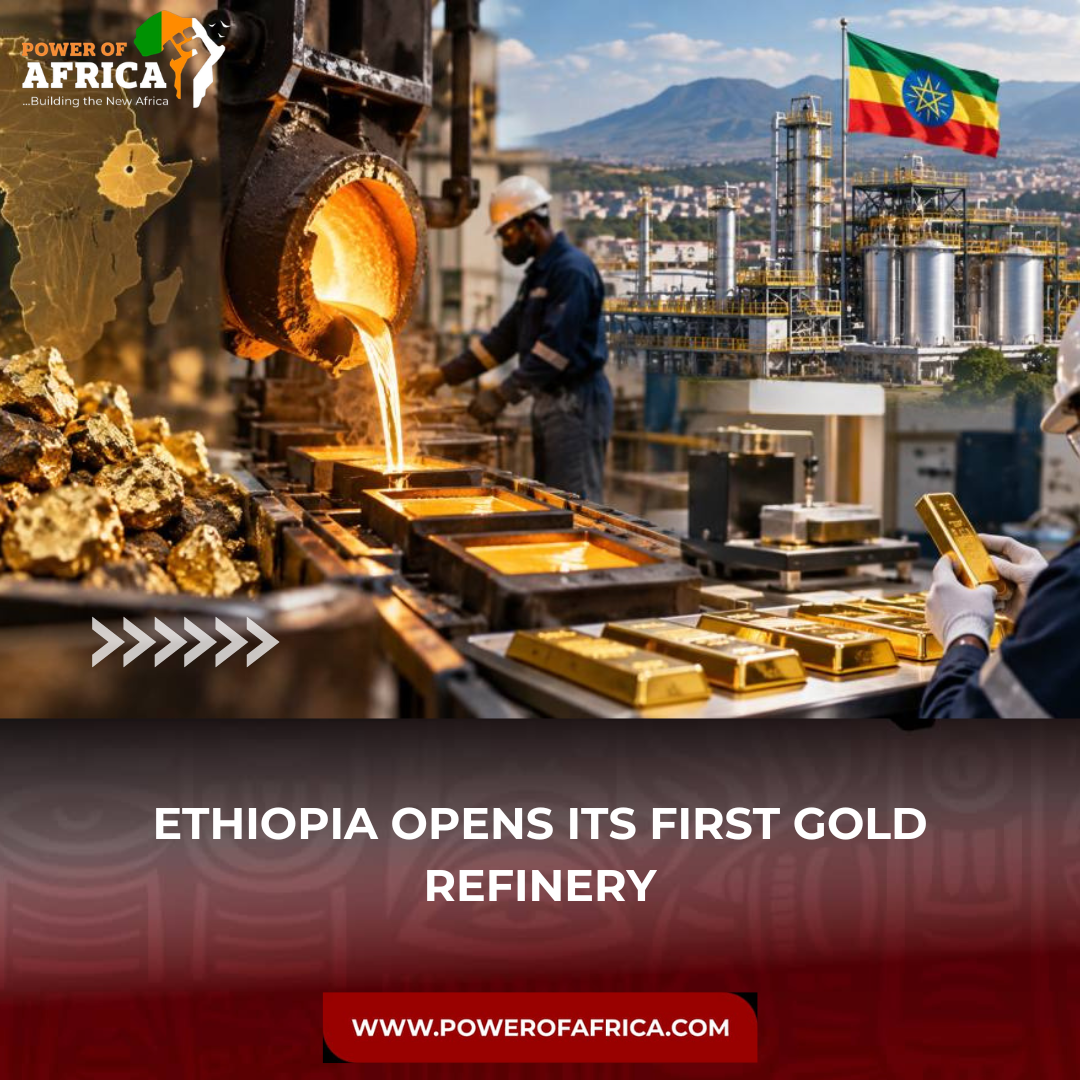
The country has inaugurated its first national precious metals refinery at the Bole Lemi Special Economic Zone. The $50 million facility was established through a partnership between Ethiopian Investment Holdings and Sam Precious Metals.
The refinery is designed to process gold and silver into refined bars that can be sold in international markets. At full capacity, it is expected to process more than 600 tonnes of precious metals annually.
For Ethiopia, this means more of the work involved in preparing gold for the market can now happen within the country, rather than relying entirely on overseas refining facilities.
And that matters for the wider African economy.
Several African countries produce gold, but mining the metal is only one part of the business. Processing it, manufacturing jewellery and developing industries around it can create more jobs and generate additional income.
When these activities happen outside the continent, African countries miss out on some of the economic benefits their resources could provide.
Ethiopia hopes its new refinery will help change that. The facility could support local mining businesses, improve export earnings and attract more investment into the country’s precious metals industry.
There is also the possibility of serving gold producers in neighbouring countries, giving Ethiopia a greater role in regional trade.
Of course, the refinery’s success will depend on its ability to attract enough gold, operate competitively and build strong relationships with suppliers and buyers.
But the idea behind it is worth paying attention to. African countries have spent years supplying raw materials to global markets. Building local processing industries offers a way to retain more value, create skilled jobs and develop businesses beyond extraction.
Ethiopia’s new refinery is one example of what that shift could look like.
