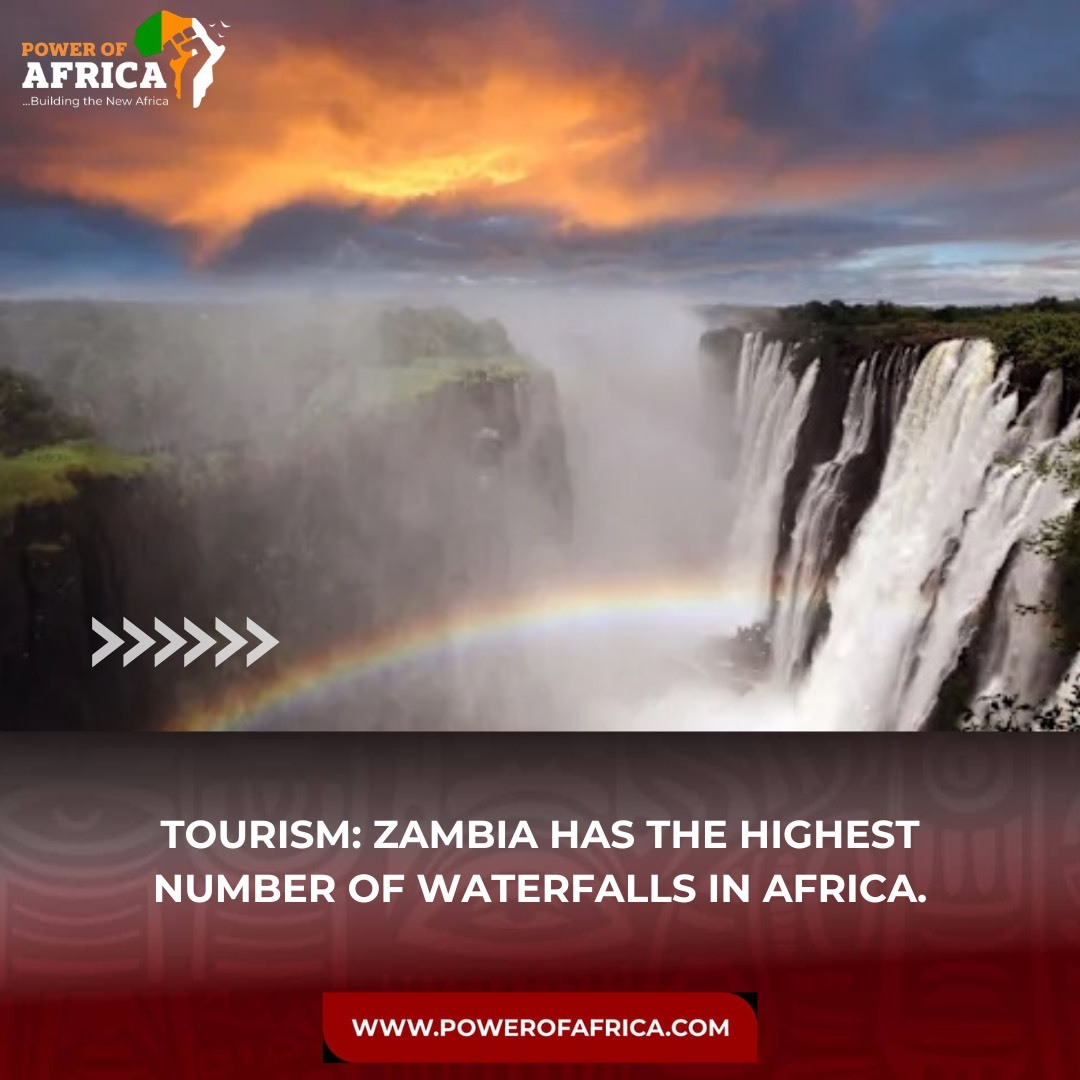
Zambia is being increasingly recognized as the African country with the highest number of waterfalls, a distinction that is drawing renewed attention to its vast natural heritage and tourism potential.
With more than 40 officially documented major waterfalls and many more spread across remote rivers and forested regions, Zambia’s landscape is considered one of the most water-rich in Southern Africa. Tourism officials and environmental advocates say the country’s unique geography — shaped by high plateaus and intersected by major river systems — has created ideal conditions for waterfall formation across several provinces.
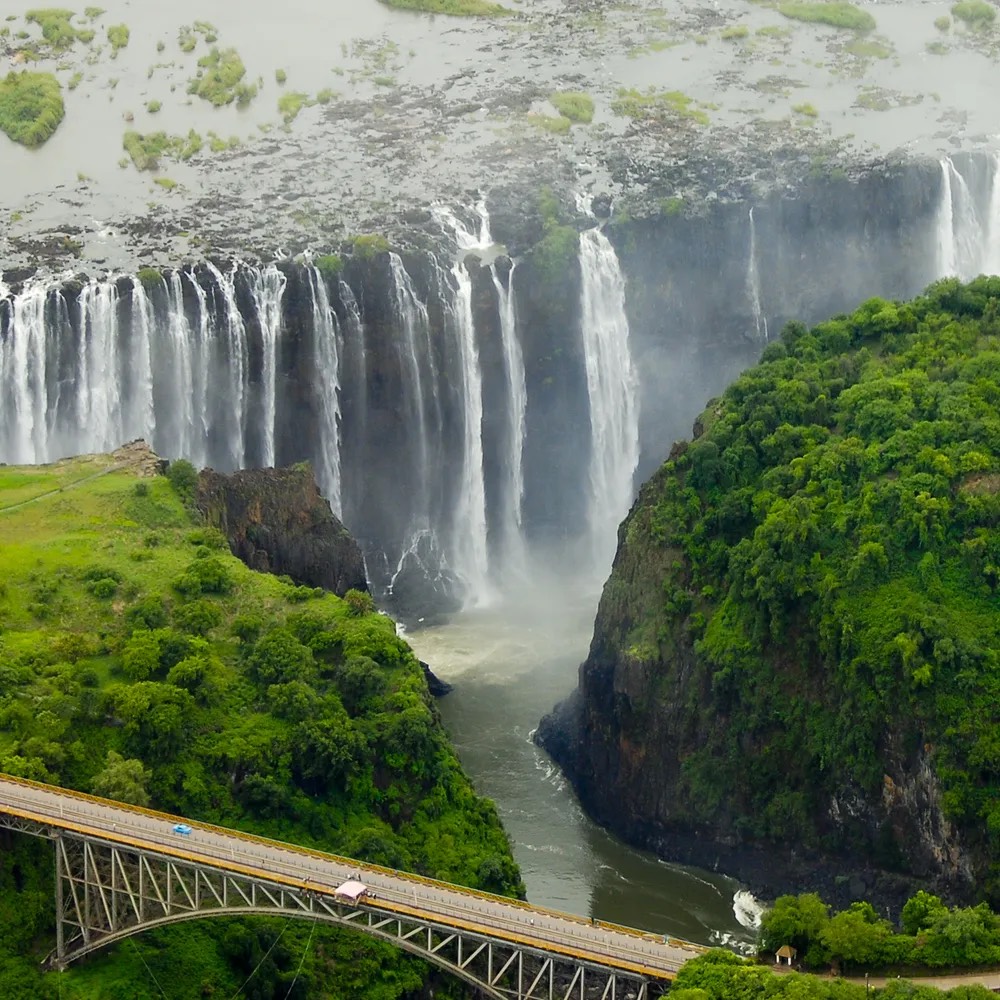
Among the most prominent is Victoria Falls, known locally as Mosi-oa-Tunya, meaning “The Smoke That Thunders.” Located on the Zambezi River in Southern Province, it remains one of the world’s largest waterfalls and a major driver of tourism to the region. The falls continue to anchor Zambia’s international tourism profile, attracting visitors from across the globe.
Beyond Victoria Falls, Zambia is home to a wide range of lesser-known but equally striking cascades. Kalambo Falls in Northern Province is one of Africa’s highest single-drop waterfalls, plunging more than 200 meters near the border with Tanzania. Lumangwe Falls, often compared to a smaller version of Victoria Falls, stretches broadly across the Kalungwishi River and has become a growing attraction for domestic travelers. Meanwhile, Ngonye Falls in Western Province offers a wide, powerful cascade upstream from Victoria Falls.
With more than 40 officially documented major waterfalls and many more spread across remote rivers and forested regions, Zambia’s landscape is considered one of the most water-rich in Southern Africa. Tourism officials and environmental advocates say the country’s unique geography — shaped by high plateaus and intersected by major river systems — has created ideal conditions for waterfall formation across several provinces.
Among the most prominent is Victoria Falls, known locally as Mosi-oa-Tunya, meaning “The Smoke That Thunders.” Located on the Zambezi River in Southern Province, it remains one of the world’s largest waterfalls and a major driver of tourism to the region. The falls continue to anchor Zambia’s international tourism profile, attracting visitors from across the globe.
Beyond Victoria Falls, Zambia is home to a wide range of lesser-known but equally striking cascades. Kalambo Falls in Northern Province is one of Africa’s highest single-drop waterfalls, plunging more than 200 meters near the border with Tanzania. Lumangwe Falls, often compared to a smaller version of Victoria Falls, stretches broadly across the Kalungwishi River and has become a growing attraction for domestic travelers. Meanwhile, Ngonye Falls in Western Province offers a wide, powerful cascade upstream from Victoria Falls.
Additional waterfalls such as Chishimba, Kundalila, Ntumbachushi and Mumbuluma are scattered across Northern, Central and Luapula provinces, many of them located in relatively undeveloped areas. Local leaders say these natural sites present significant opportunities for eco-tourism development, job creation and community-based tourism initiatives.
Experts note that while other African countries also boast impressive waterfalls, Zambia’s concentration and distribution across multiple provinces sets it apart. The country’s extensive river network, including the Zambezi and Congo river basins, contributes to the large number of perennial and seasonal falls.
However, infrastructure challenges remain a barrier to fully leveraging this natural advantage. Several waterfall sites are difficult to access due to limited road networks and minimal tourism facilities. Authorities say plans are underway to promote sustainable development while preserving the ecological integrity of the sites.
As global interest in nature-based tourism continues to grow, Zambia’s reputation as a potential “waterfall capital” of Africa is gaining momentum. Tourism stakeholders believe increased marketing and infrastructure investment could further position the country as a premier destination for adventure travelers and conservation tourism in the years ahead.
Experts note that while other African countries also boast impressive waterfalls, Zambia’s concentration and distribution across multiple provinces sets it apart. The country’s extensive river network, including the Zambezi and Congo river basins, contributes to the large number of perennial and seasonal falls.
However, infrastructure challenges remain a barrier to fully leveraging this natural advantage. Several waterfall sites are difficult to access due to limited road networks and minimal tourism facilities. Authorities say plans are underway to promote sustainable development while preserving the ecological integrity of the sites.
As global interest in nature-based tourism continues to grow, Zambia’s reputation as a potential “waterfall capital” of Africa is gaining momentum. Tourism stakeholders believe increased marketing and infrastructure investment could further position the country as a premier destination for adventure travelers and conservation tourism in the years ahead.
