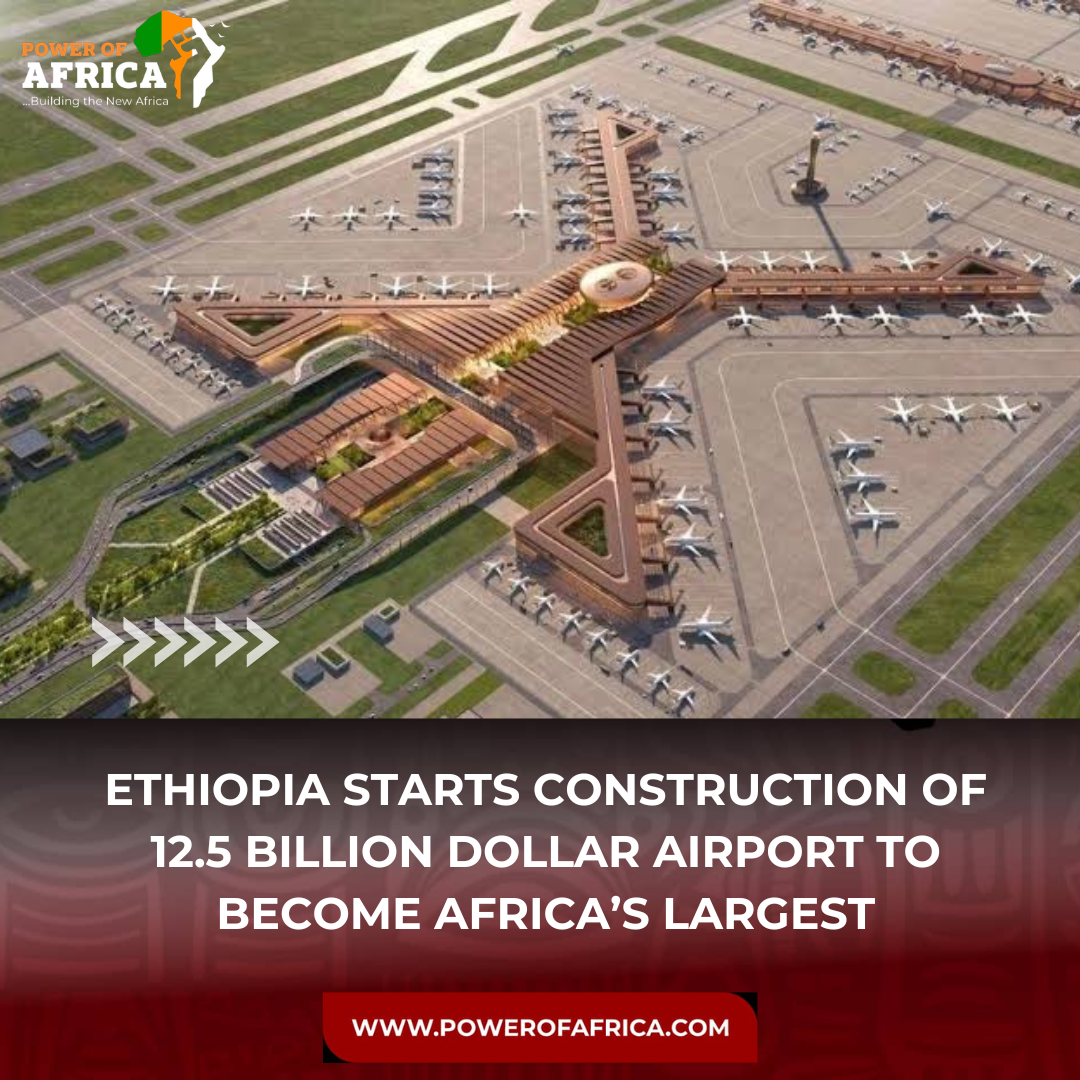
Ethiopia has officially commenced construction on a major international airport project valued at 12.5 billion dollars, a bold move set to reshape air travel across the continent. The new development is expected to become the largest airport in Africa upon completion, reinforcing the country’s ambition to position itself as a central aviation hub.
The project will be located near Bishoftu, a town situated about 40 kilometers southeast of Addis Ababa. This strategic location is designed to ease congestion at the existing Addis Ababa Bole International Airport, which currently serves as one of Africa’s busiest airports. With passenger numbers steadily increasing, the need for expanded capacity has become urgent.
According to Ethiopian Airlines, the new airport will initially handle up to 60 million passengers annually, with room for future expansion. This capacity significantly surpasses that of the current airport and places Ethiopia in direct competition with leading global aviation hubs.
The airport is expected to feature multiple runways, advanced cargo facilities, and modern passenger terminals designed to meet international standards. It will also support Ethiopia’s growing role in global logistics and trade, particularly as air cargo demand continues to rise across Africa.
The project will be located near Bishoftu, a town situated about 40 kilometers southeast of Addis Ababa. This strategic location is designed to ease congestion at the existing Addis Ababa Bole International Airport, which currently serves as one of Africa’s busiest airports. With passenger numbers steadily increasing, the need for expanded capacity has become urgent.
According to Ethiopian Airlines, the new airport will initially handle up to 60 million passengers annually, with room for future expansion. This capacity significantly surpasses that of the current airport and places Ethiopia in direct competition with leading global aviation hubs.
The airport is expected to feature multiple runways, advanced cargo facilities, and modern passenger terminals designed to meet international standards. It will also support Ethiopia’s growing role in global logistics and trade, particularly as air cargo demand continues to rise across Africa.

Government officials have emphasized that the project will stimulate economic growth by creating thousands of jobs during and after construction. It is also expected to attract foreign investment and boost tourism by improving connectivity to and from Ethiopia.
This development aligns with Ethiopia’s broader infrastructure strategy, which focuses on large scale investments in transport, energy, and industrialization. By strengthening its aviation capacity, the country aims to solidify its position as a gateway between Africa and the rest of the world.
While the project presents significant opportunities, analysts note that its success will depend on effective execution, financing stability, and long term demand for air travel in the region.
This development aligns with Ethiopia’s broader infrastructure strategy, which focuses on large scale investments in transport, energy, and industrialization. By strengthening its aviation capacity, the country aims to solidify its position as a gateway between Africa and the rest of the world.
While the project presents significant opportunities, analysts note that its success will depend on effective execution, financing stability, and long term demand for air travel in the region.
