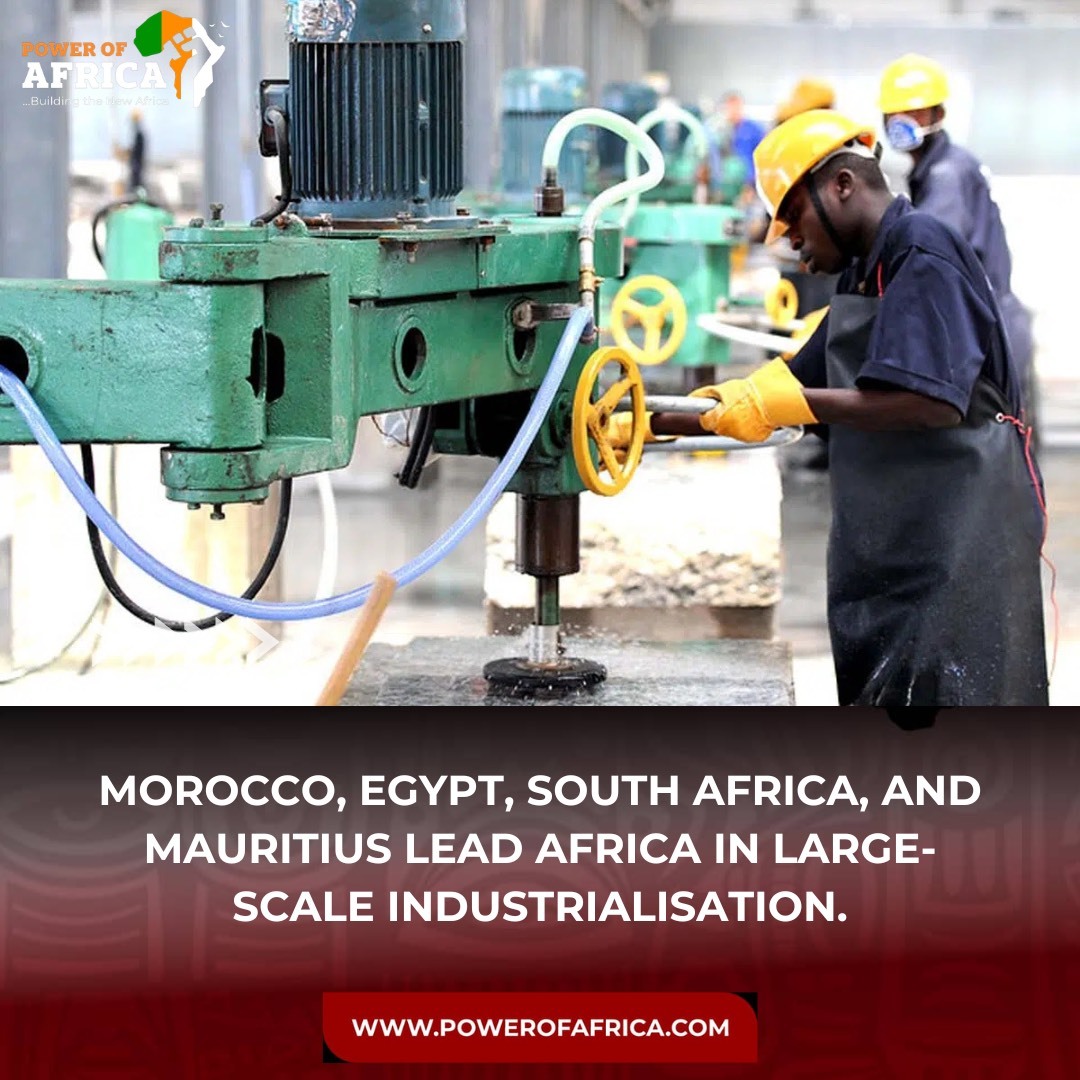
Africa’s industrial landscape is evolving rapidly, with Morocco, Egypt, South Africa, and Mauritius emerging as the continent’s leading nations for large-scale industrialisation.
The ranking reflects years of investment in manufacturing, infrastructure, energy, logistics, and industrial policy, positioning the four countries as key drivers of Africa’s economic transformation.
Analysts say each country has developed a distinct industrial strength.
Morocco has become a major hub for automotive manufacturing, renewable energy, and export-focused industries, attracting international companies seeking access to African and European markets.
Egypt continues to expand its industrial base through large infrastructure projects, manufacturing zones, and investments in construction materials, textiles, and energy production. The country’s strategic location also strengthens its role as a trade and logistics gateway linking Africa, the Middle East, and Europe.
South Africa remains one of the continent’s most industrialized economies, with strong sectors in mining, automobile production, steel, technology, and financial services. Its advanced infrastructure and manufacturing capacity continue to make it a major economic force on the continent.
The ranking reflects years of investment in manufacturing, infrastructure, energy, logistics, and industrial policy, positioning the four countries as key drivers of Africa’s economic transformation.
Analysts say each country has developed a distinct industrial strength.
Morocco has become a major hub for automotive manufacturing, renewable energy, and export-focused industries, attracting international companies seeking access to African and European markets.
Egypt continues to expand its industrial base through large infrastructure projects, manufacturing zones, and investments in construction materials, textiles, and energy production. The country’s strategic location also strengthens its role as a trade and logistics gateway linking Africa, the Middle East, and Europe.
South Africa remains one of the continent’s most industrialized economies, with strong sectors in mining, automobile production, steel, technology, and financial services. Its advanced infrastructure and manufacturing capacity continue to make it a major economic force on the continent.
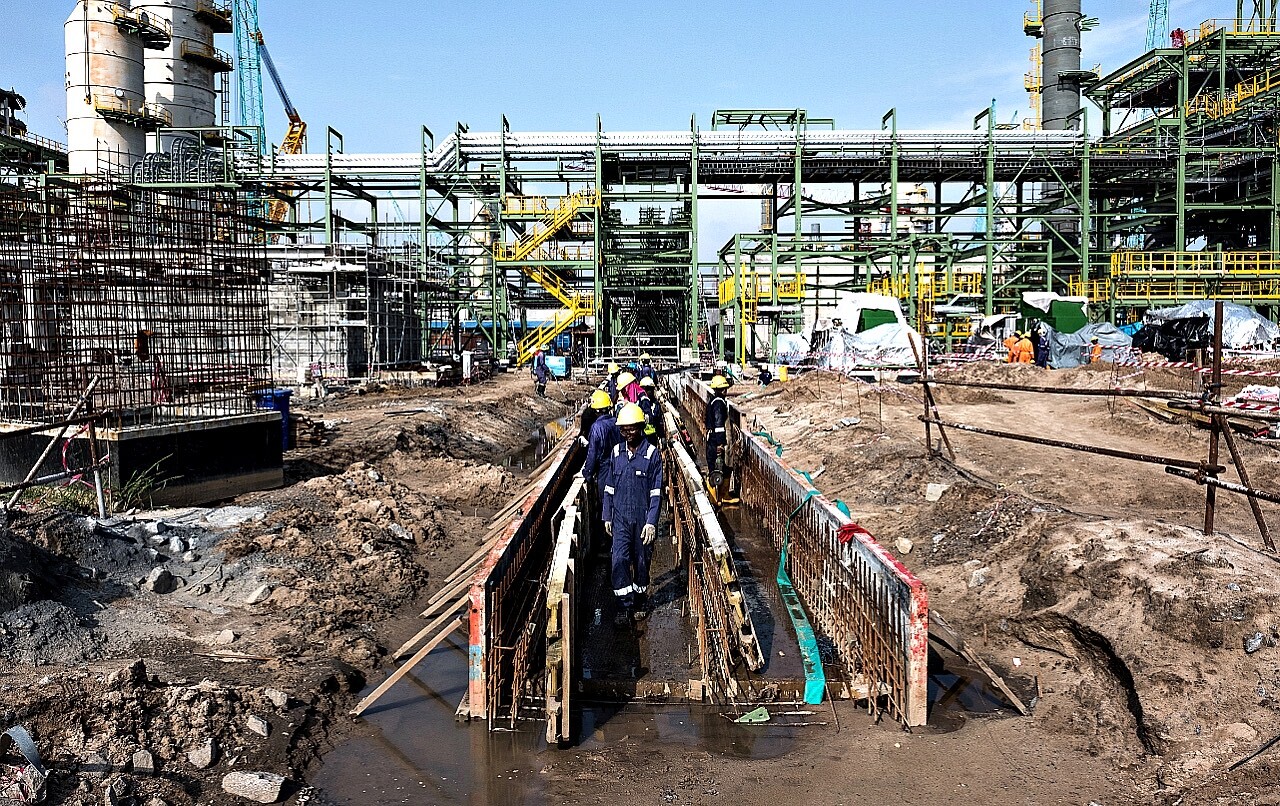
Meanwhile, Mauritius has built a diversified economy powered by manufacturing, financial services, technology, and export industries. Despite its smaller size, the island nation is often recognized for its business-friendly environment and efficient economic systems.
Economists say industrialisation is critical for Africa’s long-term development because it creates jobs, boosts exports, reduces dependence on raw material exports, and strengthens economic resilience.
The recognition of these countries comes at a time when many African nations are pushing to expand local manufacturing and reduce reliance on imports, particularly in sectors such as food processing, pharmaceuticals, technology, and energy.
Experts believe the progress made by Morocco, Egypt, South Africa, and Mauritius could serve as a model for other African economies seeking sustainable growth through industrial development.
Economists say industrialisation is critical for Africa’s long-term development because it creates jobs, boosts exports, reduces dependence on raw material exports, and strengthens economic resilience.
The recognition of these countries comes at a time when many African nations are pushing to expand local manufacturing and reduce reliance on imports, particularly in sectors such as food processing, pharmaceuticals, technology, and energy.
Experts believe the progress made by Morocco, Egypt, South Africa, and Mauritius could serve as a model for other African economies seeking sustainable growth through industrial development.
