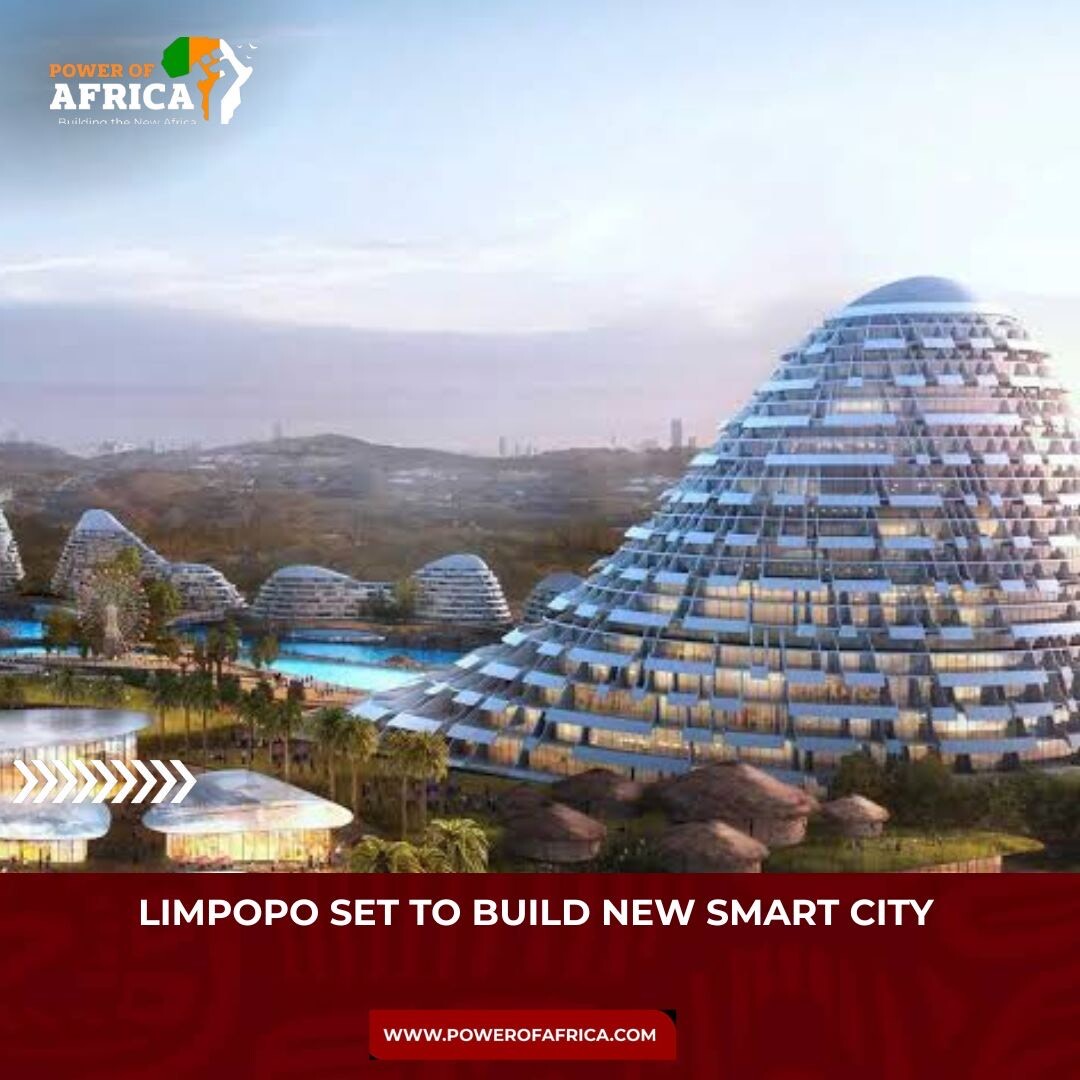
South Africa’s Limpopo province is preparing for a significant urban shift as plans for a new smart city take shape. The project represents a forward-looking move to modernise the province, support its fast-growing population, and position Limpopo as a competitive economic hub in Southern Africa. Authorities view the smart city as a strategic investment that will help the region move beyond traditional development patterns and embrace a digital, efficient, and globally aligned future.
The new city will be built on a foundation of advanced digital infrastructure, integrating technology into everyday services to improve efficiency and quality of life. Early design concepts include mixed-use districts that combine residential areas, commercial zones, innovation centres, and public facilities within a connected ecosystem. This approach aims to reduce travel time, enhance service delivery, and encourage sustainable living across the city.
Transport planning will play a central role in the development. The province expects to introduce improved road networks, smart mobility solutions, and energy-efficient systems that can ease congestion and support economic activity. Officials also highlight the project’s potential to boost investment in key sectors such as technology, green energy, logistics, agriculture, and tourism. These industries are expected to benefit from the city’s modern layout, digital readiness, and strategic location within the region.
The new city will be built on a foundation of advanced digital infrastructure, integrating technology into everyday services to improve efficiency and quality of life. Early design concepts include mixed-use districts that combine residential areas, commercial zones, innovation centres, and public facilities within a connected ecosystem. This approach aims to reduce travel time, enhance service delivery, and encourage sustainable living across the city.
Transport planning will play a central role in the development. The province expects to introduce improved road networks, smart mobility solutions, and energy-efficient systems that can ease congestion and support economic activity. Officials also highlight the project’s potential to boost investment in key sectors such as technology, green energy, logistics, agriculture, and tourism. These industries are expected to benefit from the city’s modern layout, digital readiness, and strategic location within the region.

Job creation is another core benefit. Construction will open thousands of opportunities for local workers and businesses, while long-term operations are expected to support a skilled workforce in areas such as data management, engineering, and urban services. The project also aligns with broader efforts to strengthen regional integration, creating new pathways for cross-border trade and cooperation within SADC markets.
As plans continue to develop, Limpopo’s smart city signals a new direction for the province. It showcases a commitment to innovation, sustainability, and inclusive growth, marking a transformative step in South Africa’s evolving urban landscape.
As plans continue to develop, Limpopo’s smart city signals a new direction for the province. It showcases a commitment to innovation, sustainability, and inclusive growth, marking a transformative step in South Africa’s evolving urban landscape.
