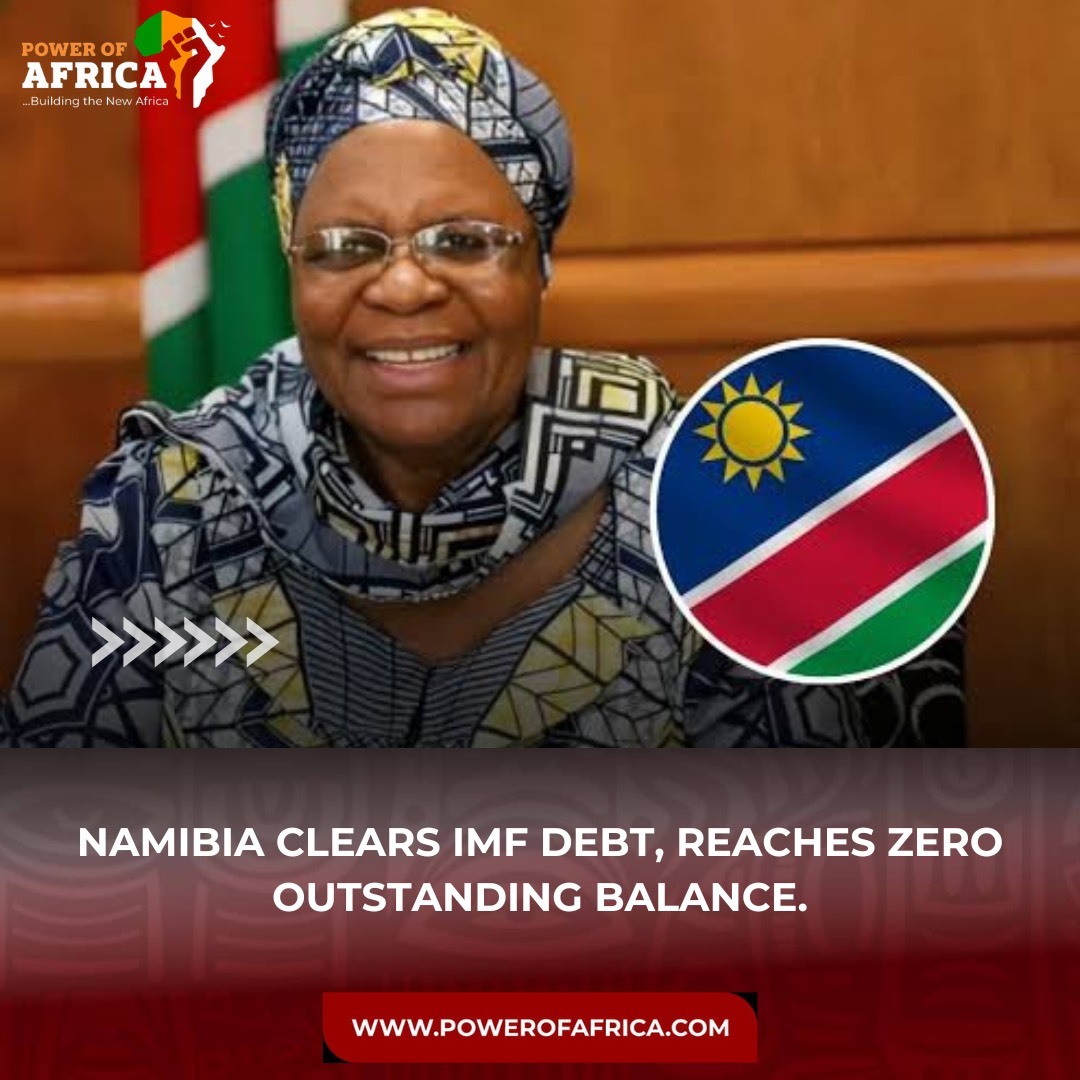
Namibia has fully repaid its debt to the International Monetary Fund, bringing its outstanding balance to zero in a move seen as a major milestone for the country’s economic management.
Government officials say the repayment reflects Namibia’s commitment to fiscal discipline and financial stability, marking the end of its obligations to the IMF under previous support arrangements. The development is expected to strengthen investor confidence and improve the country’s standing in international financial markets.
Economists note that clearing IMF debt gives Namibia greater policy flexibility, allowing the government to manage its economy without the constraints that often come with external financial programs. It also signals improved capacity to meet financial obligations and maintain macroeconomic stability.
The repayment comes at a time when many countries are grappling with rising debt levels and economic pressures. Namibia’s move positions it among a smaller group of nations that have successfully reduced their exposure to multilateral debt.
Government officials say the repayment reflects Namibia’s commitment to fiscal discipline and financial stability, marking the end of its obligations to the IMF under previous support arrangements. The development is expected to strengthen investor confidence and improve the country’s standing in international financial markets.
Economists note that clearing IMF debt gives Namibia greater policy flexibility, allowing the government to manage its economy without the constraints that often come with external financial programs. It also signals improved capacity to meet financial obligations and maintain macroeconomic stability.
The repayment comes at a time when many countries are grappling with rising debt levels and economic pressures. Namibia’s move positions it among a smaller group of nations that have successfully reduced their exposure to multilateral debt.
Officials say the focus going forward will be on sustaining economic growth, managing public finances responsibly, and investing in key sectors such as infrastructure, healthcare, and energy.
While challenges remain, including global economic uncertainties and domestic development needs, analysts believe the milestone sends a strong message about Namibia’s economic direction and long-term planning.
For Namibia, reaching zero IMF debt is more than a financial achievement. It represents a step toward greater economic independence and resilience in an increasingly complex global economy.
While challenges remain, including global economic uncertainties and domestic development needs, analysts believe the milestone sends a strong message about Namibia’s economic direction and long-term planning.
For Namibia, reaching zero IMF debt is more than a financial achievement. It represents a step toward greater economic independence and resilience in an increasingly complex global economy.
