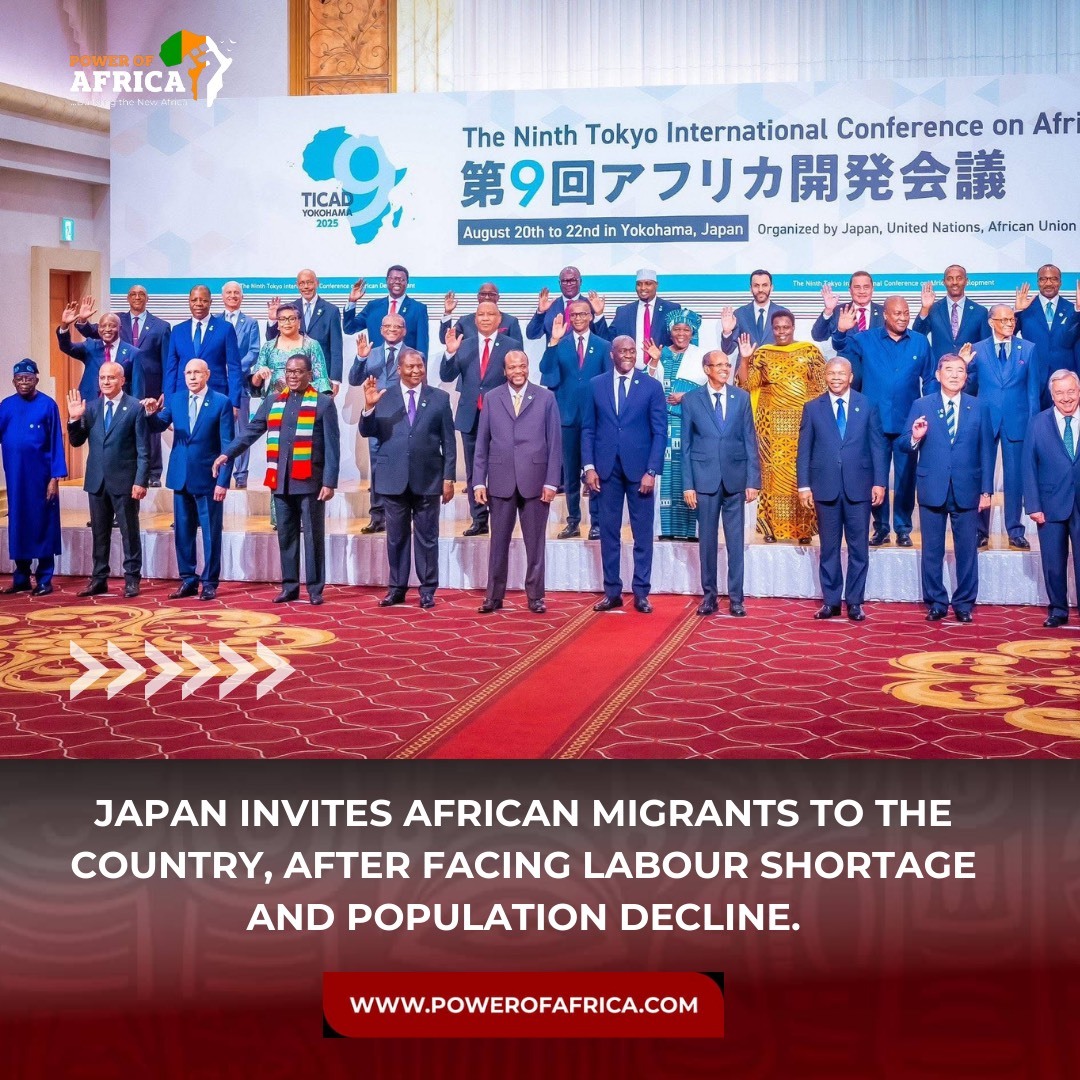
Japan has announced new measures to welcome African migrants, as the country grapples with a shrinking population and a growing labour shortage across key industries.
The initiative marks a significant shift in Japan’s traditionally strict immigration policies. Officials in Tokyo explained that the move is aimed at filling critical workforce gaps in sectors such as healthcare, construction, manufacturing, and technology, which have been heavily impacted by the country’s ageing population.
Japan’s population has been declining for over a decade, with birth rates at historic lows and life expectancy among the highest in the world. This demographic imbalance has placed increasing pressure on the labour market and the economy at large.
The initiative marks a significant shift in Japan’s traditionally strict immigration policies. Officials in Tokyo explained that the move is aimed at filling critical workforce gaps in sectors such as healthcare, construction, manufacturing, and technology, which have been heavily impacted by the country’s ageing population.
Japan’s population has been declining for over a decade, with birth rates at historic lows and life expectancy among the highest in the world. This demographic imbalance has placed increasing pressure on the labour market and the economy at large.

By inviting African migrants, Japan hopes to diversify its workforce and tap into a young, skilled, and dynamic labour pool. Authorities said integration programs, language training, and cultural exchange initiatives will be part of the policy rollout to ensure smoother assimilation.
Analysts note that Japan’s outreach to Africa also strengthens bilateral relations, opening doors for greater economic cooperation and knowledge exchange. For African countries, the program presents new opportunities for employment, skills development, and remittances to support families back home.
While details of the migration framework are still being finalized, Japan’s decision has been widely viewed as a bold step toward addressing its demographic challenges while deepening ties with the African continent.
Analysts note that Japan’s outreach to Africa also strengthens bilateral relations, opening doors for greater economic cooperation and knowledge exchange. For African countries, the program presents new opportunities for employment, skills development, and remittances to support families back home.
While details of the migration framework are still being finalized, Japan’s decision has been widely viewed as a bold step toward addressing its demographic challenges while deepening ties with the African continent.
