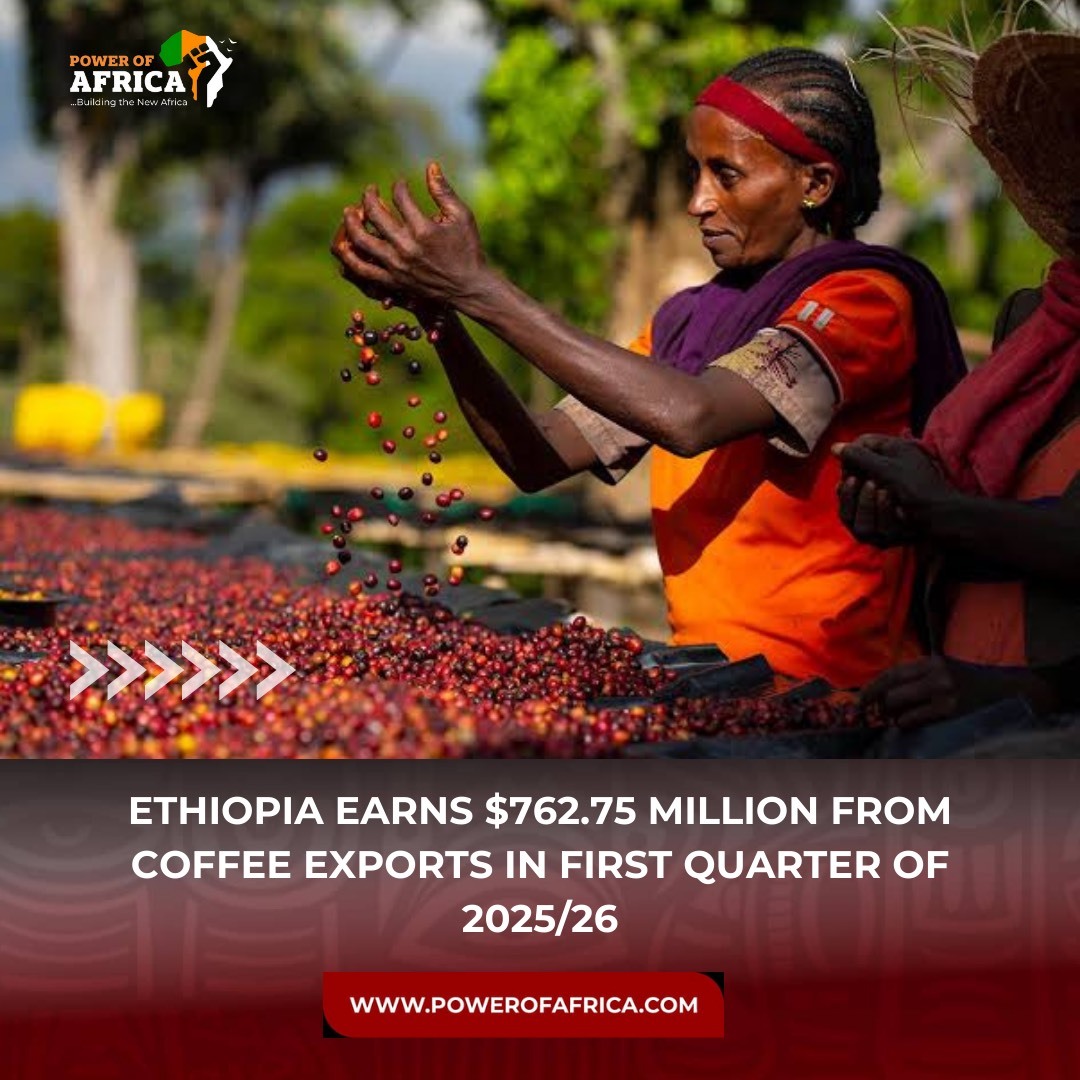
Ethiopia has earned $762.75 million from coffee exports in the first quarter of the 2025/26 fiscal year, covering the months of July to September. The Ethiopian Coffee and Tea Authority reported that the country exported 113,542 tons of coffee during this period, marking one of the strongest starts to a fiscal year in recent times.
Despite achieving only about 75% of its planned export volume, Ethiopia exceeded its revenue target by more than 23%. Officials attribute this performance to higher global coffee prices and increased demand across key international markets.
Germany, Saudi Arabia, and Belgium remained the top destinations for Ethiopian coffee, while emerging markets such as China, South Korea, Japan, and the United Arab Emirates showed notable growth. Authorities say that improved traceability systems, strengthened quality standards, and diversification of export destinations played crucial roles in boosting revenue.
Despite achieving only about 75% of its planned export volume, Ethiopia exceeded its revenue target by more than 23%. Officials attribute this performance to higher global coffee prices and increased demand across key international markets.
Germany, Saudi Arabia, and Belgium remained the top destinations for Ethiopian coffee, while emerging markets such as China, South Korea, Japan, and the United Arab Emirates showed notable growth. Authorities say that improved traceability systems, strengthened quality standards, and diversification of export destinations played crucial roles in boosting revenue.
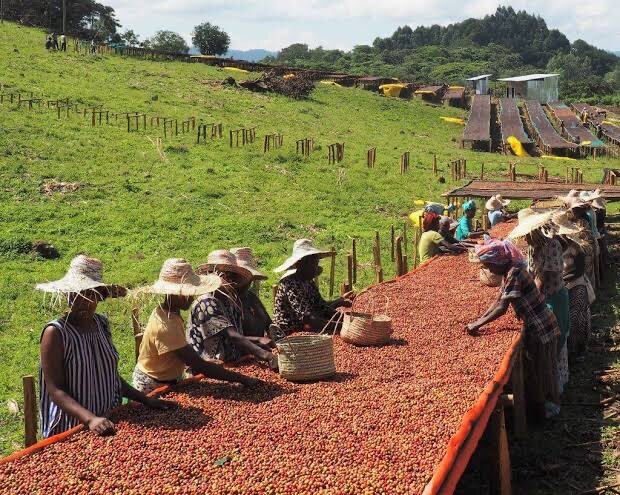
The Director General of the Coffee and Tea Authority noted that the country’s shift from a volume-focused strategy to a value-driven approach is yielding significant results. Enhanced inspection, processing, and branding efforts have allowed Ethiopian exporters to command higher prices on the international market.
Coffee continues to be the backbone of Ethiopia’s export economy, supporting millions of smallholder farmers and contributing a substantial portion of national foreign exchange earnings. The strong first-quarter performance is seen as an encouraging sign as the country seeks to expand its footprint in both traditional and emerging coffee markets.
Officials say they expect continued growth throughout the fiscal year as reforms in the coffee value chain — including digital traceability, market reforms, and quality enforcement — begin to take deeper effect.
Coffee continues to be the backbone of Ethiopia’s export economy, supporting millions of smallholder farmers and contributing a substantial portion of national foreign exchange earnings. The strong first-quarter performance is seen as an encouraging sign as the country seeks to expand its footprint in both traditional and emerging coffee markets.
Officials say they expect continued growth throughout the fiscal year as reforms in the coffee value chain — including digital traceability, market reforms, and quality enforcement — begin to take deeper effect.
