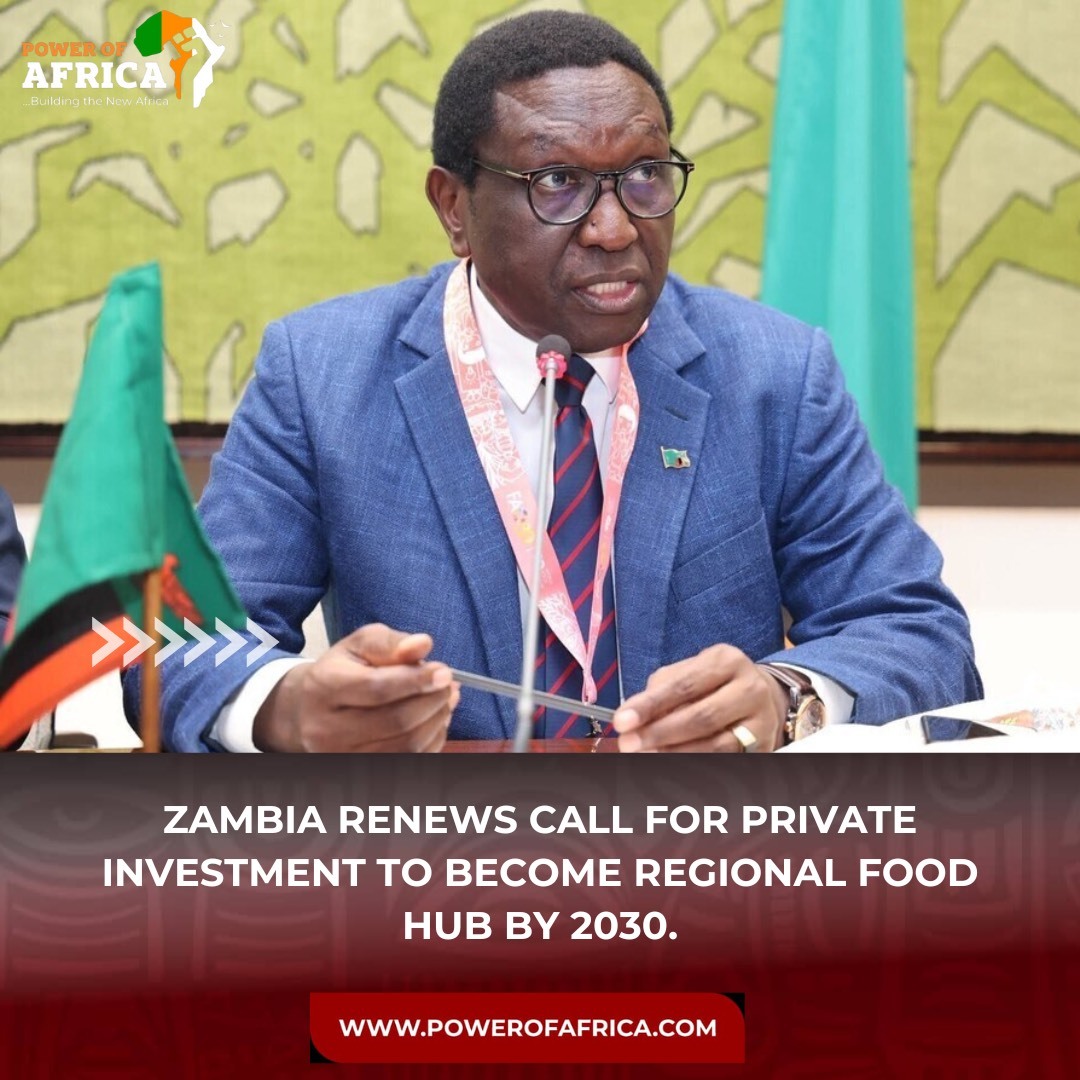
The Zambian government has renewed its call for increased private sector investment in agriculture as part of an ambitious plan to transform the country into a regional food hub by 2030.
Minister of Fisheries and Livestock, Engineer Peter Kapala, made the announcement during a recent investment meeting, emphasizing that the agricultural sector remains central to Zambia’s economic growth strategy and food security agenda. He said the government’s goal is to strengthen the country’s capacity to produce, process and export food across the Southern African region.
As part of this drive, Zambia aims to achieve annual production targets of 10 million metric tonnes of maize, one million metric tonnes of soybeans, and one million metric tonnes of wheat by 2030. These targets form part of President Hakainde Hichilema’s long-term vision to position Zambia as a leader in regional agribusiness and food exports.
Minister Kapala noted that Zambia’s unique geographical position, bordered by eight countries and offering access to over 400 million potential consumers, gives it a strategic advantage for cross-border trade and agricultural investment. He added that the nation’s vast arable land, favorable climate and water resources create ideal conditions for large-scale farming and agro-processing industries.
Minister of Fisheries and Livestock, Engineer Peter Kapala, made the announcement during a recent investment meeting, emphasizing that the agricultural sector remains central to Zambia’s economic growth strategy and food security agenda. He said the government’s goal is to strengthen the country’s capacity to produce, process and export food across the Southern African region.
As part of this drive, Zambia aims to achieve annual production targets of 10 million metric tonnes of maize, one million metric tonnes of soybeans, and one million metric tonnes of wheat by 2030. These targets form part of President Hakainde Hichilema’s long-term vision to position Zambia as a leader in regional agribusiness and food exports.
Minister Kapala noted that Zambia’s unique geographical position, bordered by eight countries and offering access to over 400 million potential consumers, gives it a strategic advantage for cross-border trade and agricultural investment. He added that the nation’s vast arable land, favorable climate and water resources create ideal conditions for large-scale farming and agro-processing industries.

To attract more investors, the government has initiated several reforms across the agricultural value chain. These include the establishment of mechanization hubs, improvements in seed and livestock production, enhanced access to financing through the Sustainable Agriculture Financing Facility and significant investments in rural infrastructure such as irrigation, storage, and farm-to-market roads.
Private sector participation has already begun to yield results. Global agribusiness companies have expanded operations in Zambia, with major investments in seed production, irrigation systems, and agro-processing facilities. These initiatives are expected to create jobs, boost productivity, and help smallholder farmers scale their operations to meet regional demand.
The government believes that a vibrant, investor-driven agricultural sector will not only strengthen food security but also diversify the economy away from heavy reliance on mining. By focusing on sustainable farming practices and technology-driven solutions, Zambia aims to become a model for agricultural transformation in Africa.
Minister Kapala reaffirmed the country’s commitment to collaboration, urging both local and international investors to seize opportunities within Zambia’s expanding agricultural landscape. “Zambia is open for business,” he said. “With the right partnerships, we can feed our region and empower our farmers while building a resilient and competitive agricultural economy.”
Private sector participation has already begun to yield results. Global agribusiness companies have expanded operations in Zambia, with major investments in seed production, irrigation systems, and agro-processing facilities. These initiatives are expected to create jobs, boost productivity, and help smallholder farmers scale their operations to meet regional demand.
The government believes that a vibrant, investor-driven agricultural sector will not only strengthen food security but also diversify the economy away from heavy reliance on mining. By focusing on sustainable farming practices and technology-driven solutions, Zambia aims to become a model for agricultural transformation in Africa.
Minister Kapala reaffirmed the country’s commitment to collaboration, urging both local and international investors to seize opportunities within Zambia’s expanding agricultural landscape. “Zambia is open for business,” he said. “With the right partnerships, we can feed our region and empower our farmers while building a resilient and competitive agricultural economy.”
